
Anatomy of a high-converting database reactivation campaign
A breakdown of what makes win-back email and SMS campaigns actually convert, instead of getting ignored.
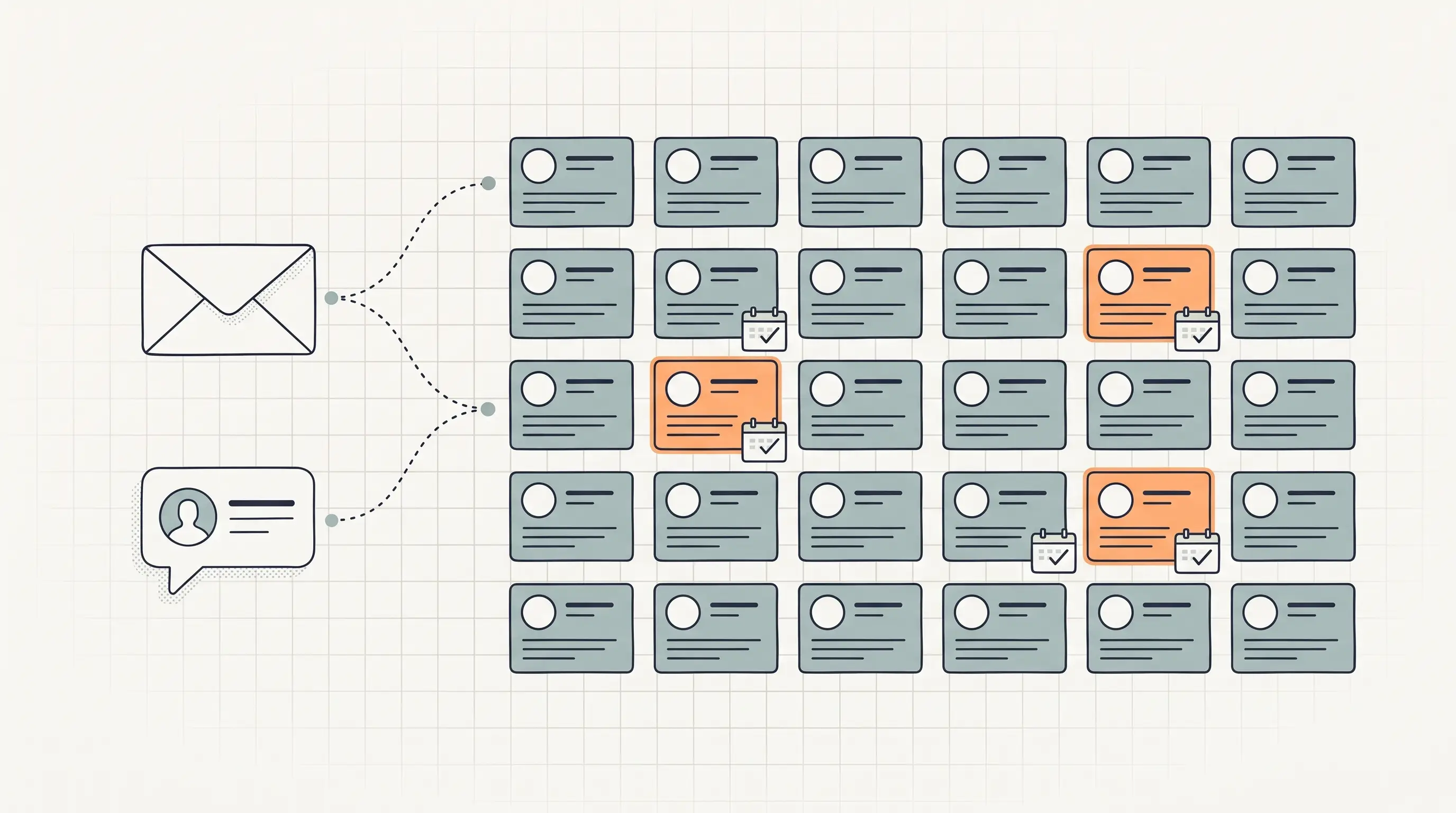


The pipeline you're already paying for
Most businesses spend heavily on acquiring new leads while ignoring a list that already cost them money once: past customers and dormant leads sitting quietly in the CRM. The economics of that list are different from cold acquisition, because you are not paying to earn attention from scratch. The prior contact, and whatever trust came with it, already exist.
What is database reactivation?
Database reactivation is a structured campaign that contacts people already in your records (past customers, lapsed enquiries, quotes that never closed) to find out who is ready to buy again. It is not a newsletter and not a one-off promotion. It has a defined list, a defined sequence, a defined window and a defined way of counting what came back.
A dormant contact is someone you have not been in touch with for a set period. Pick that period before you start and write it down. If you leave it vague, you cannot tell afterwards whether a deal came from the campaign or would have happened anyway.
Why most win-back campaigns fail
A single generic "we miss you" email rarely works. The lists that convert are segmented: by how recently the contact went quiet, why they originally disengaged, and what would actually be relevant to them now.
The other common failure is quieter. The campaign goes out, a few replies arrive, and nobody follows them up within the day. A reply to a reactivation message is a warm lead with a short shelf life. If your sales process cannot respond quickly, fix that before you send anything.
Can you legally contact your old list?
Check this before you write a single message. The rules differ by market, and they apply to both email and SMS.
- Norway. The Marketing Control Act (markedsføringsloven § 15) requires prior consent before sending marketing by electronic mail to private individuals, and its definition of electronic mail expressly includes SMS. There is an exception for existing customer relationships: where you received the customer's address in connection with a sale, you may market your own similar products, provided the customer was given a simple, free way to opt out when the address was collected and in each later message.
- United Kingdom. The ICO's guidance on PECR describes a similar "soft opt-in": contact details collected directly during a sale or negotiation, marketing limited to your own similar products or services, and a simple opt-out offered at collection and in every message. The ICO applies the same rules to text messages.
In practice, this means your list usually splits into contacts you may message now, contacts who need a consent step first, and contacts you should remove. B2B rules also differ from consumer rules. Treat this section as orientation, not legal advice.
What a real reactivation sequence looks like
- Segment first. Not every dormant lead went quiet for the same reason. Treat them differently.
- Lead with value, not a sales pitch. The first touch should re-earn attention, not ask for a meeting.
- Use more than one channel. Email and two-way SMS sequenced together give a dormant contact more than one chance to notice. Test the pairing against email alone on your own list rather than assuming it wins.
- Track re-engagement, not just replies. A click or a reply is a signal worth scoring and following up on quickly.
A simple segmentation that works for most service businesses:
- Past customers. Why they went quiet: need was met. What the first touch should do: ask about a new or recurring need.
- Lost quotes. Why they went quiet: price, timing or a competitor. What the first touch should do: acknowledge the gap; offer something that changed.
- Unconverted enquiries. Why they went quiet: never got a proper answer. What the first touch should do: answer the original question properly.
- Unknown. Why they went quiet: no notes in the CRM. What the first touch should do: short check-in; let replies sort them.
An illustrative sequence
Illustrative only. This is a hypothetical example, not a client case, and it shows structure, not expected results.
Picture a physiotherapy clinic with several hundred former patients who have not booked in over a year, all of whom gave their details when they booked and paid.
- Day 1, email. A short, useful note: a seasonal tip relevant to the most common treatment type, with one line saying the clinic has new evening availability. No discount, no hard ask.
- Day 3, two-way SMS. One plain sentence from a named person at the clinic, asking whether the contact would like a check-in appointment. Replies go to a real inbox that someone reads during opening hours.
- Day 7, email. A final message for non-responders, with a direct booking link and an easy way to opt out of further messages.
Every click and reply is logged against the contact, and anyone who opts out is suppressed across both channels immediately. The clinic then counts bookings that came from contacts in the campaign within the agreed window, and nothing else.
Pre-launch checklist
- Dormancy period defined in days and written down
- Consent basis checked for each segment and market
- Opt-out works on both email and SMS and is honoured across both
- Segments built, with a first message written for each
- Reply handling owned by a named person, with a same-day response target
- Attribution window and "what counts as a won deal" agreed before launch
- Email-only control group set aside, if the list is large enough to test
Done well, database reactivation turns a static list into a channel you can measure properly, because the hardest part, getting someone to say yes once, already happened. The service page sets out what the audit, segmentation and build actually cover, and on what terms. If you are not sure your list is a fit, see who we work with.
Frequently asked questions
How old can a contact be and still be worth reactivating?
There is no universal cut-off; it depends on your buying cycle and how much your offer has changed. The practical limit is usually data quality and consent rather than age. Run a small test on your oldest segment before including it in the full campaign.
Should database reactivation use email or SMS?
Email and two-way SMS used together give a dormant contact more than one chance to notice the message. Whether the pairing beats email alone depends on your audience, so test it on your own list. SMS should always allow replies and a clear opt-out.
How do you measure whether a reactivation campaign worked?
Agree before launch what counts as a qualifying deal, and the window within which it must close. Count only deals from contacts in the campaign inside that window. Keeping an email-only control group, where the list is large enough, shows what the extra channel added.
Related reading
Want to know where your own site stands?
See where you stand: technical SEO health, AI visibility gaps and your top three fixes, delivered within 2 working days and yours to keep.
Free AI Audit